Samosir rewards a little homework. The scenery explains itself; the culture does not. This guide gathers what we would want a friend to know before setting out: how the lake came to be, who the Batak are, how to behave in a village, what to eat, how to handle money and safety, and how to fit it all into three, five or seven days.
Understanding the lake
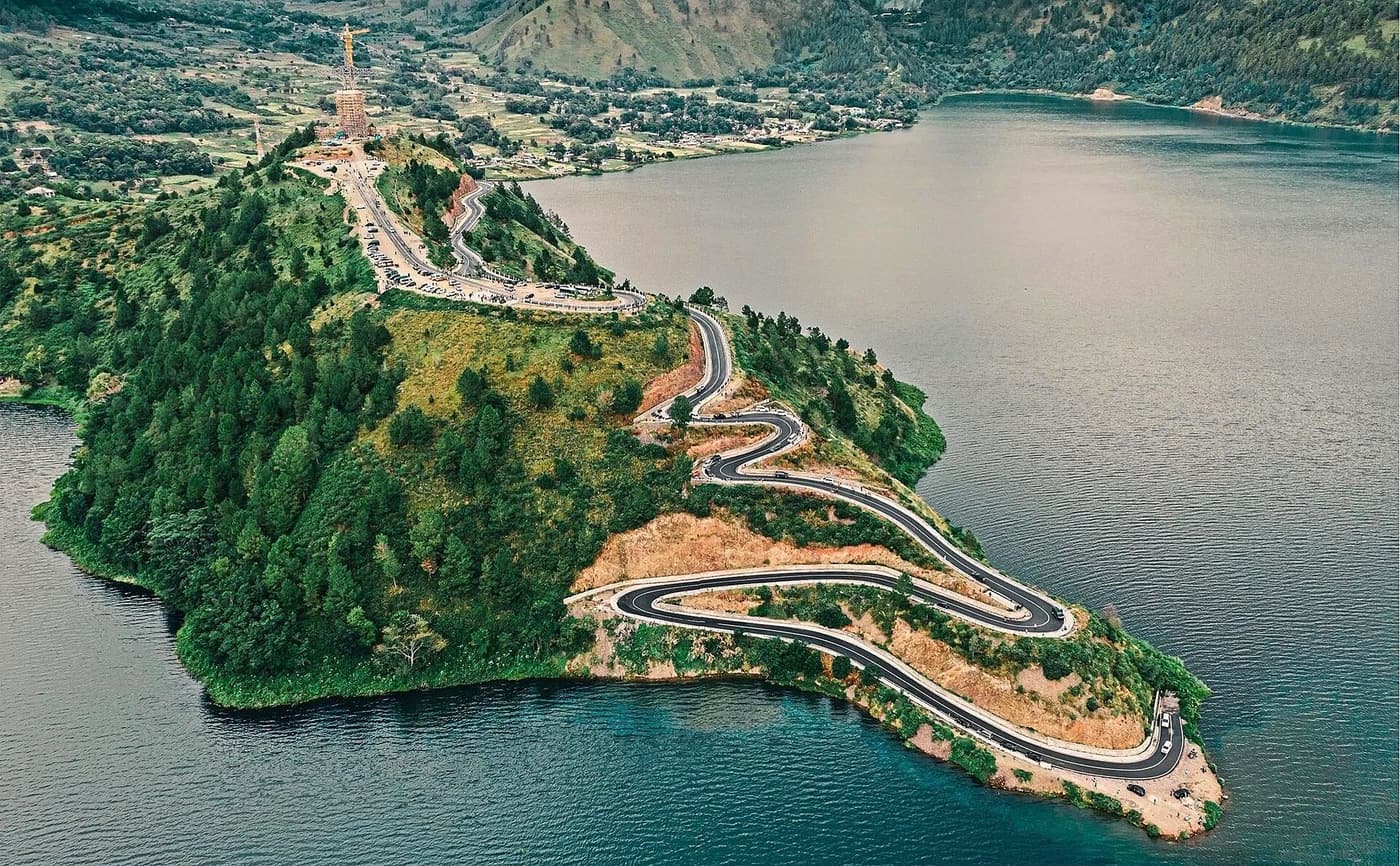
Lake Toba fills a caldera — the collapsed crater of a supervolcano. Its last great eruption, about 74,000 years ago, was one of the largest known in the Earth’s recent geological history and spread ash as far as India. Afterwards the emptied magma chamber collapsed, rain filled the hollow, and pressure from below slowly pushed the caldera floor back up. That uplifted floor is Samosir.
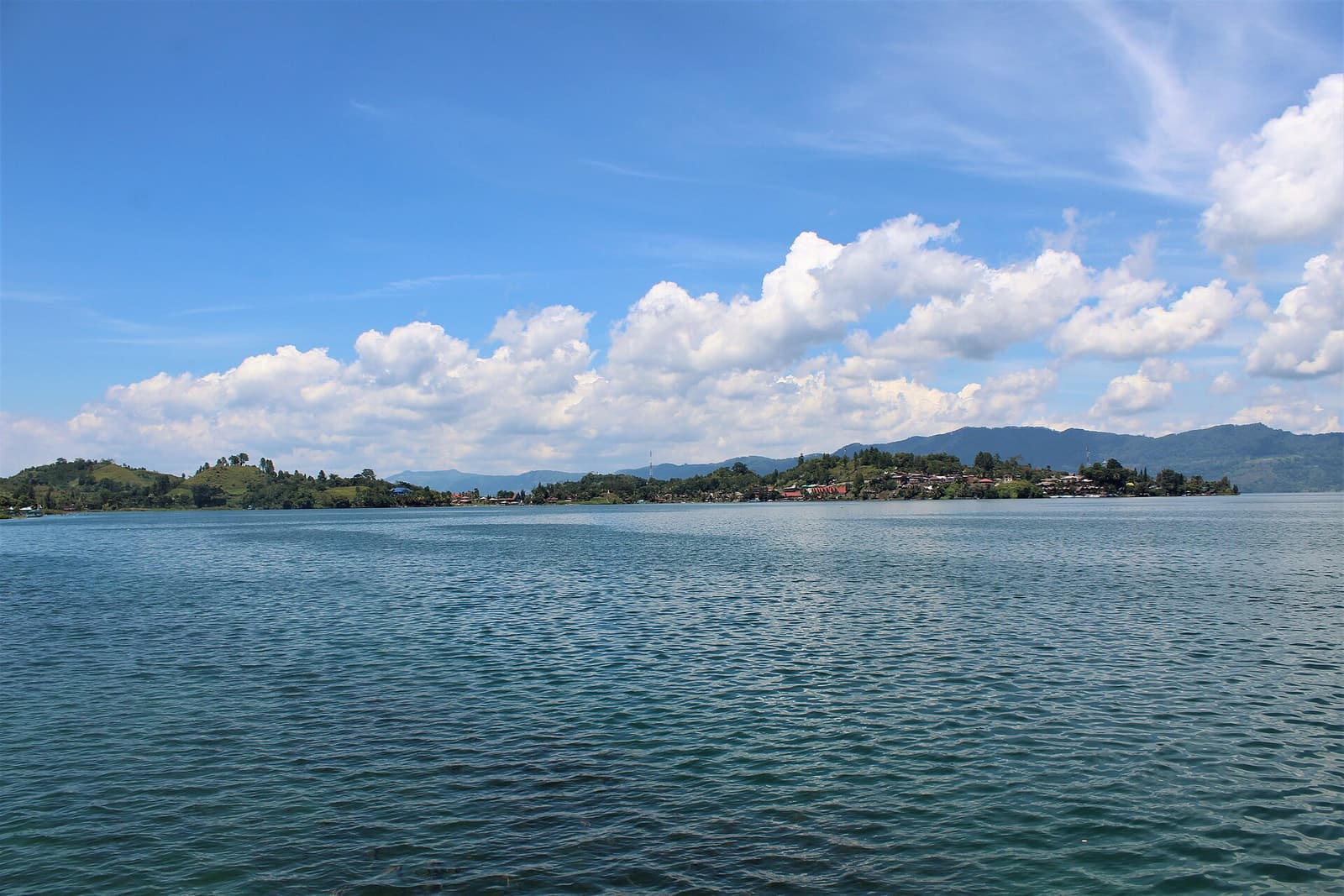
The numbers are hard to take in from the shore: the lake is about 100 km long and 30 km wide, covers more than 1,100 square kilometres and reaches roughly 500 metres in depth. Its surface lies around 900 metres above sea level, which is why the air is fresh, the nights are cool and the sun is stronger than it feels. In 2020 the Toba Caldera was recognised as a UNESCO Global Geopark.
Distances from Tuk Tuk
Most visitors stay in Tuk Tuk. This is roughly what to allow by scooter or car, one way, without stops:
| Place | From Tuk Tuk | Time to allow there | What it is |
|---|---|---|---|
| Tomok | 10–15 min | 1–1½ hours | Sidabutar royal tombs, Sigale-gale, souvenir market |
| Ambarita (Huta Siallagan) | 15 min | 45 min | Stone chairs of the Batak court |
| Simanindo | 35–45 min | 1½–2 hours | Huta Bolon Museum and dance performance |
| Pangururan & hot springs | ≈ 1¼ hours | Half a day | Bridge, Aek Rangat pools, Parbaba beach |
| Bukit Holbung & Efrata | 2–2½ hours | Half a day | Grass hills over the lake, waterfall |
| Tele viewing tower | ≈ 2 hours | 1 hour | Panorama from the caldera rim |
 On Samosir Island
 Tuk Tuk
The laid-back peninsula where almost everyone stays
A small, green peninsula on Samosir’s east coast, ringed by a single lane of guesthouses, lakeside restaurants and swimming jetties. Passenger boats from Parapat drop you at your hotel’s own pier, and everything else on the island is a scooter ride away.
 On Samosir Island
  On Samosir Island
 Ambarita & Huta Siallagan
The stone chairs where Batak kings held court
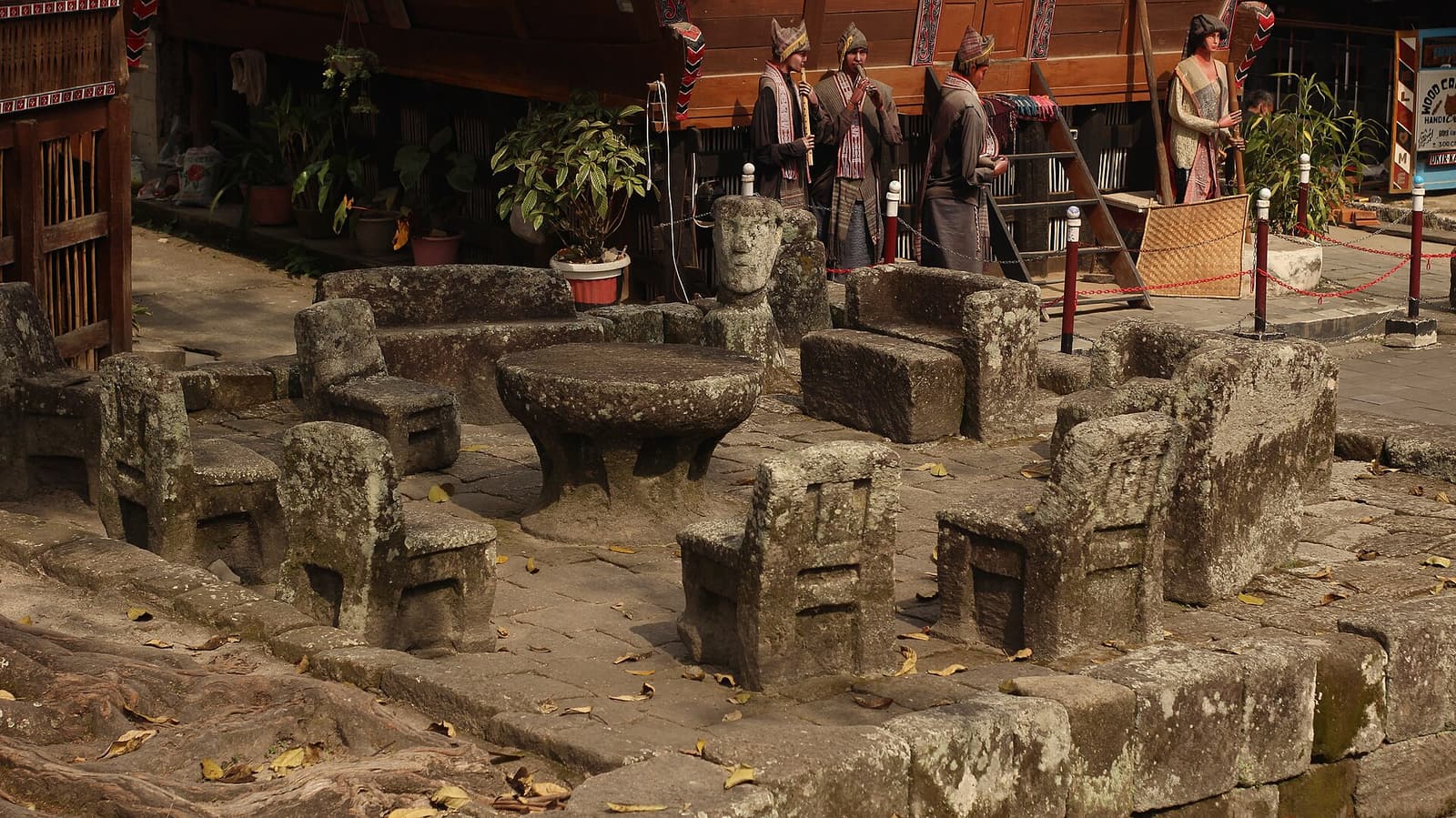
A walled Batak village a short ride north of Tuk Tuk. Under an old tree stands a ring of stone chairs where the Siallagan chiefs met and passed judgement, with a second set behind the houses where, the guides will tell you, sentences were carried out.
 On Samosir Island
 Simanindo & Huta Bolon Museum
A king’s house turned museum, with morning dances
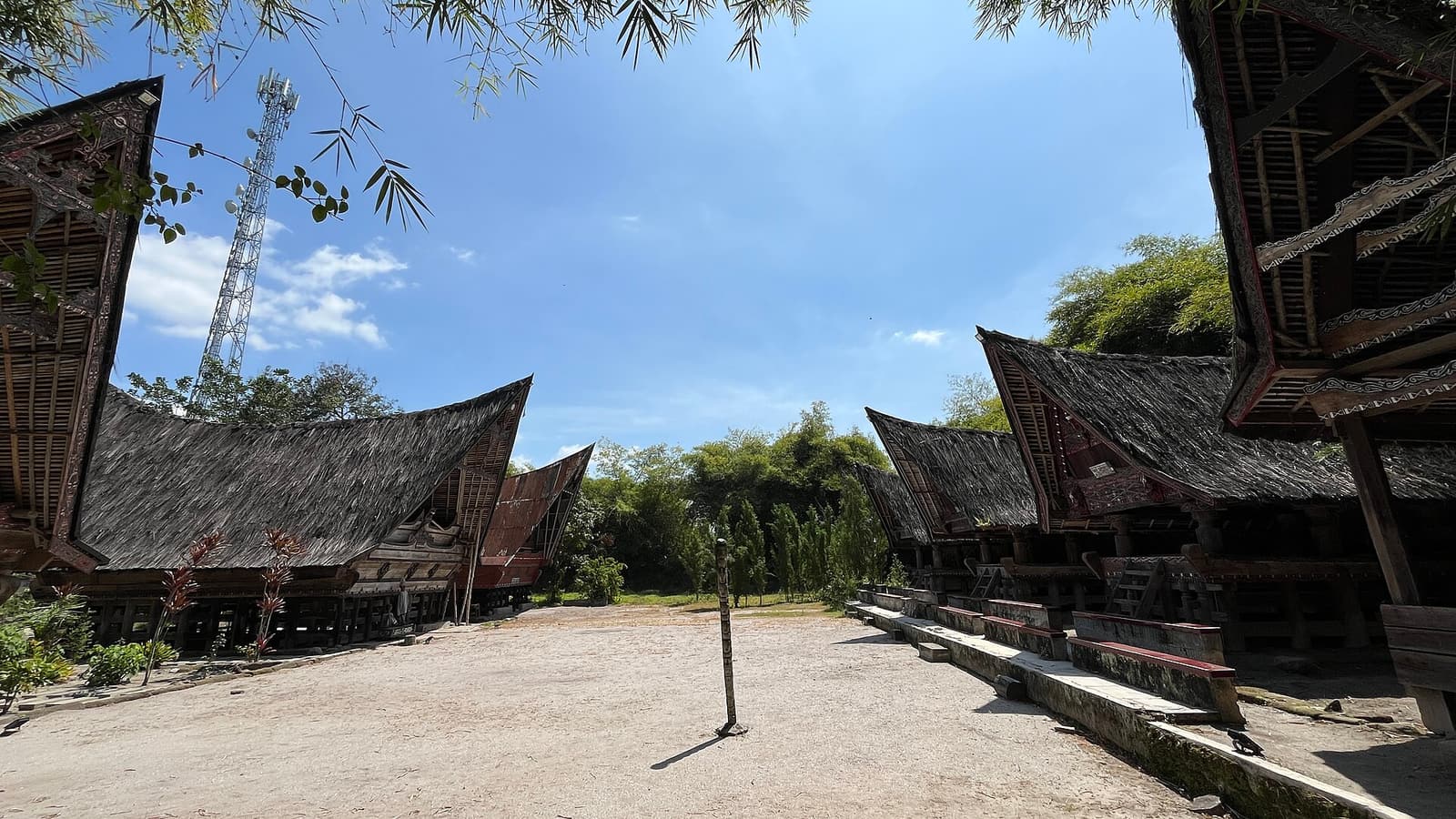
At the northern tip of the island, the former home of Raja Sidauruk is now the Huta Bolon Museum: a handsome row of restored Batak houses, a collection of household and ritual objects, and traditional dance performances most mornings.
A short history
The Toba Batak lived around the lake for centuries in fortified villages ruled by clan chiefs, largely cut off from the coastal sultanates by the mountains and by a fierce reputation. Spiritual authority rested with a line of priest-kings, the Sisingamangaraja. European contact came late: German missionaries of the Rhenish Mission, led by Ludwig Ingwer Nommensen, settled in the Batak lands in the 1860s, and within a couple of generations most Toba Batak had become Protestant Christians. The Dutch colonial army followed; the last priest-king, Sisingamangaraja XII, was killed in 1907 and is now an Indonesian national hero.
Tourism arrived with overland travellers in the 1970s, boomed in the 1990s, collapsed after the Asian financial crisis and has been rebuilding ever since. The Indonesian government now promotes Lake Toba as one of its priority destinations, which has brought new roads, the bridge at Pangururan and upgraded harbours — and, so far, surprisingly few crowds.
Batak Toba culture in brief
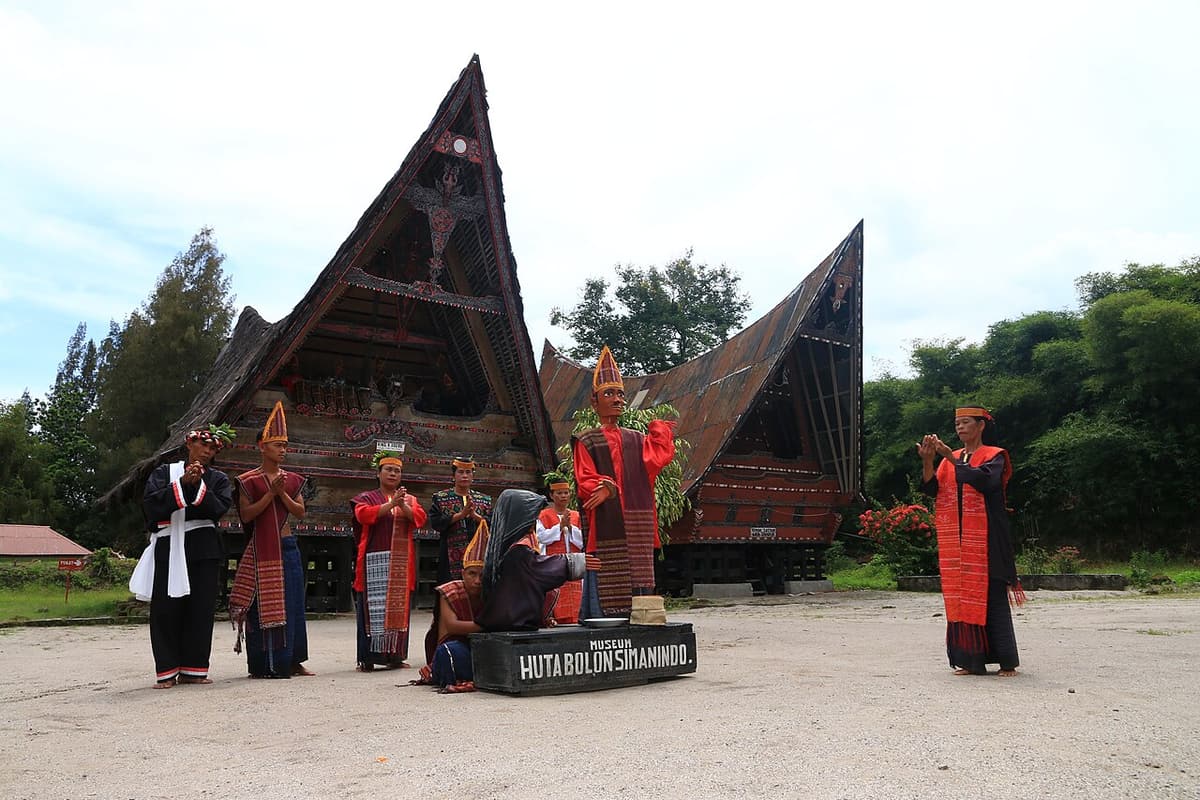
- Clans: every Batak belongs to a marga, a patrilineal clan whose name serves as a surname — Sidabutar, Siallagan, Sinaga, Situmorang and hundreds more. Marriage within the same marga is forbidden, and two strangers will establish how they are related within minutes of meeting.
- Dalihan Na Tolu: the “three-stone hearth”, the principle that orders social life: respect for the wife-giving family, care for the wife-receiving family and solidarity among clan-mates. It governs who sits where and who gives what at every wedding and funeral.
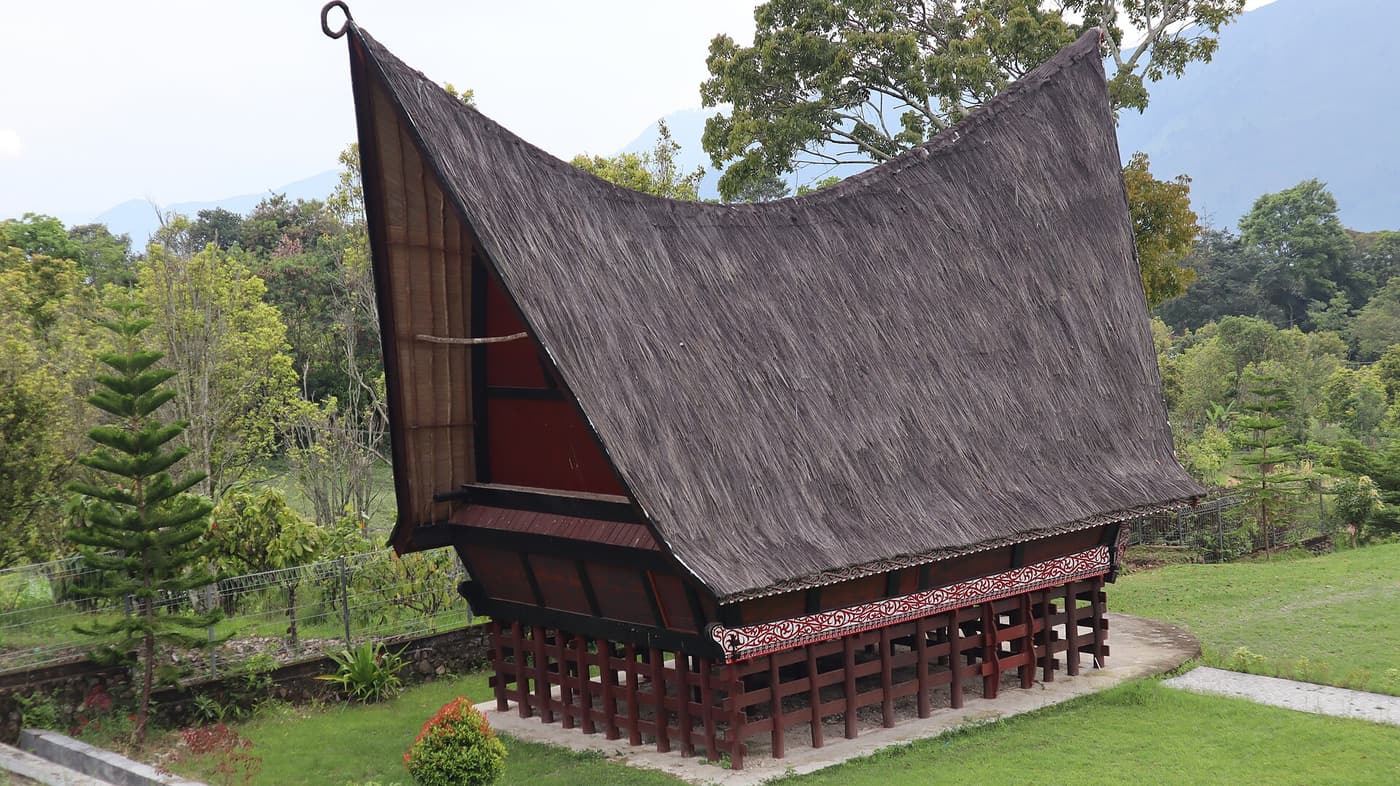
- Houses: the traditional rumah bolon stands on pillars, built without nails, under a saddle roof that rises higher at the back than the front. Gables are carved and painted with gorga in red, white and black.
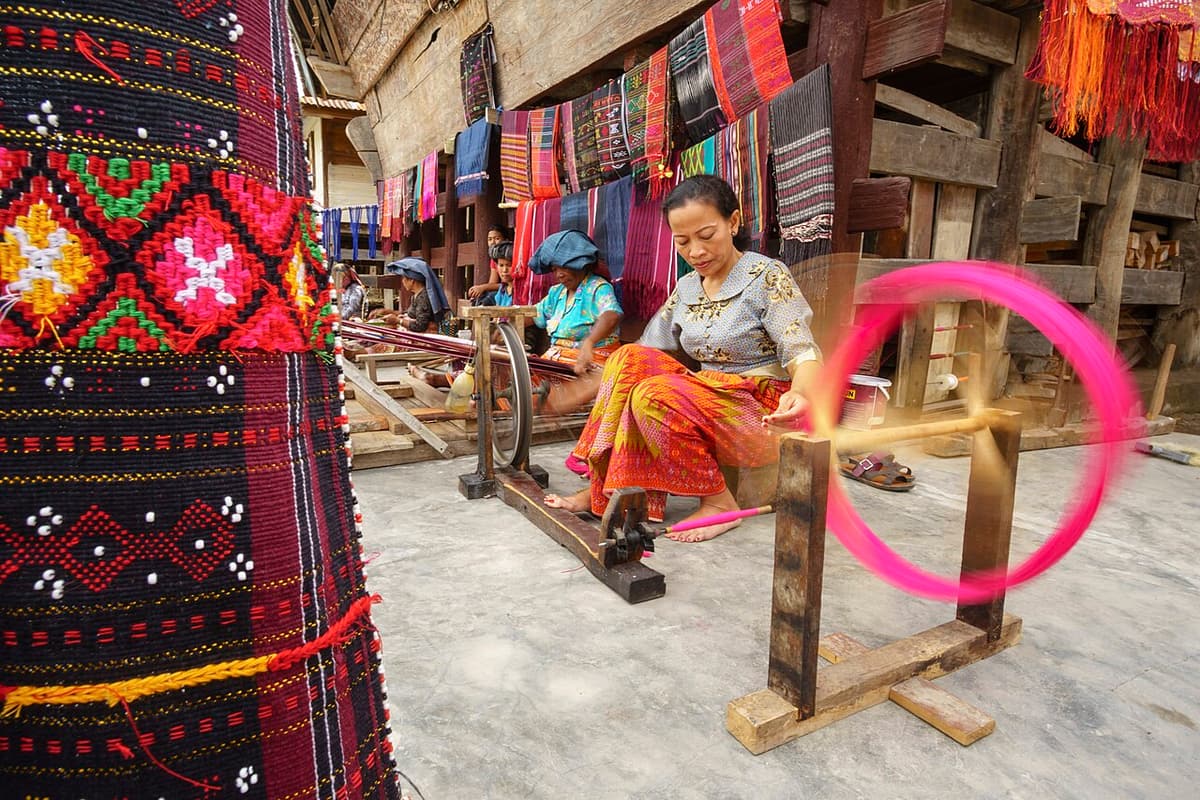
- Ulos: handwoven cloths given at births, weddings and deaths. Each pattern has a name and a proper occasion; draping an ulos over someone’s shoulders is a blessing.
- Music and dance: the gondang ensemble of tuned drums, gongs and oboe accompanies the tor-tor, a restrained dance of the hands. The Batak are also famous across Indonesia as singers — you will hear why in any Tuk Tuk bar.
- Religion: most Toba Batak are Protestant, many belonging to the HKBP church, with a Catholic minority. Elements of the old religion survive in respect for ancestors and in grand family tombs; a small community, the Parmalim, still follows the indigenous faith.
Etiquette
- The all-purpose greeting is “Horas!” — hello, welcome, good health and cheers in one word. Use it freely.
- The Batak are direct, loud and humorous by Indonesian standards. What sounds like an argument is usually a conversation.
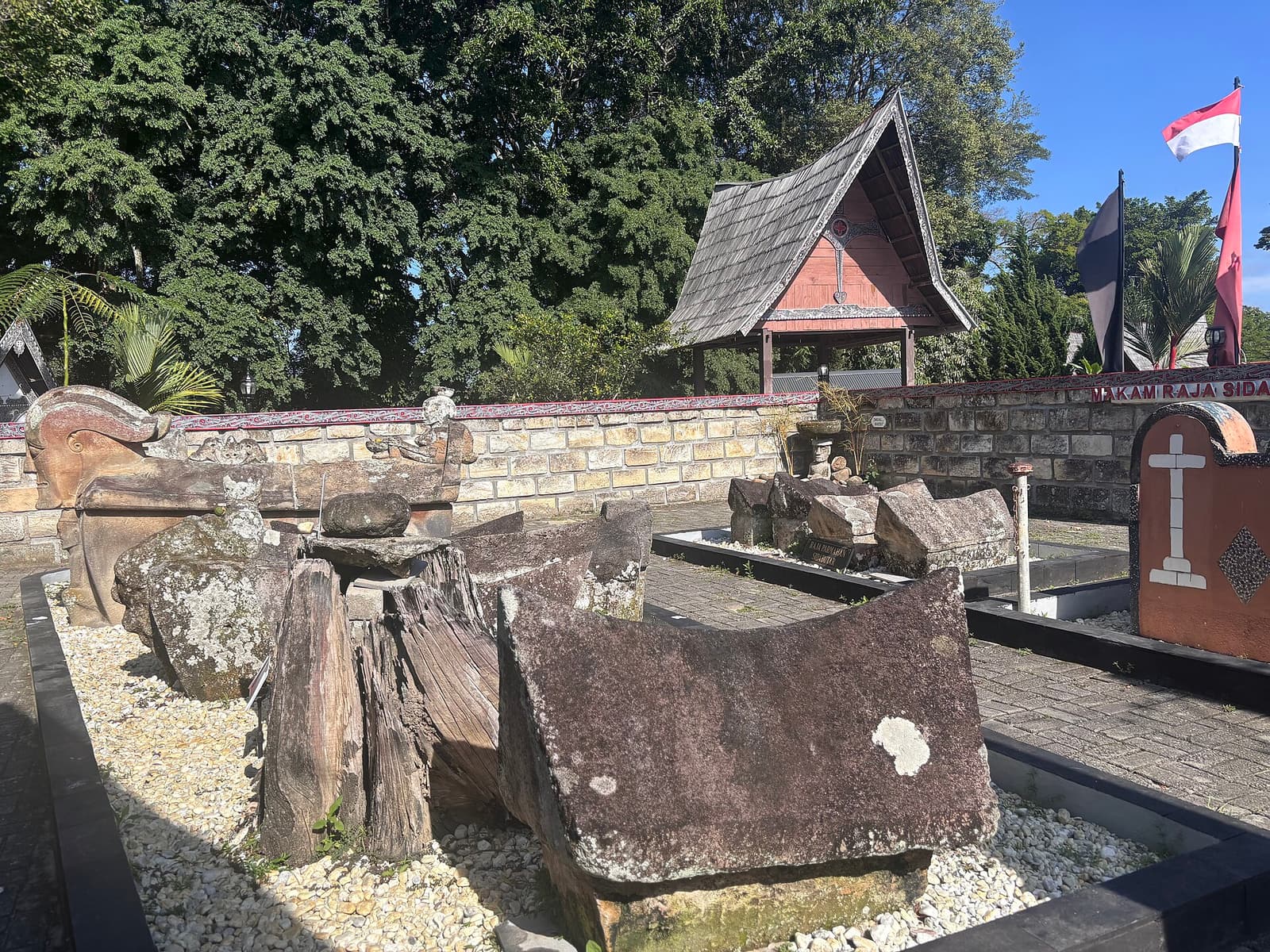
- Tombs are everywhere, often in fields or beside houses. They are family monuments: do not climb or sit on them, and ask before photographing ceremonies.
- If you are invited to a wedding or funeral feast — it happens — accept, dress neatly and follow your host’s lead. A small cash gift in an envelope is customary.
- Swimwear is fine at the jetty; cover up on the road and in villages. Sunday morning is for church.
Food and drink
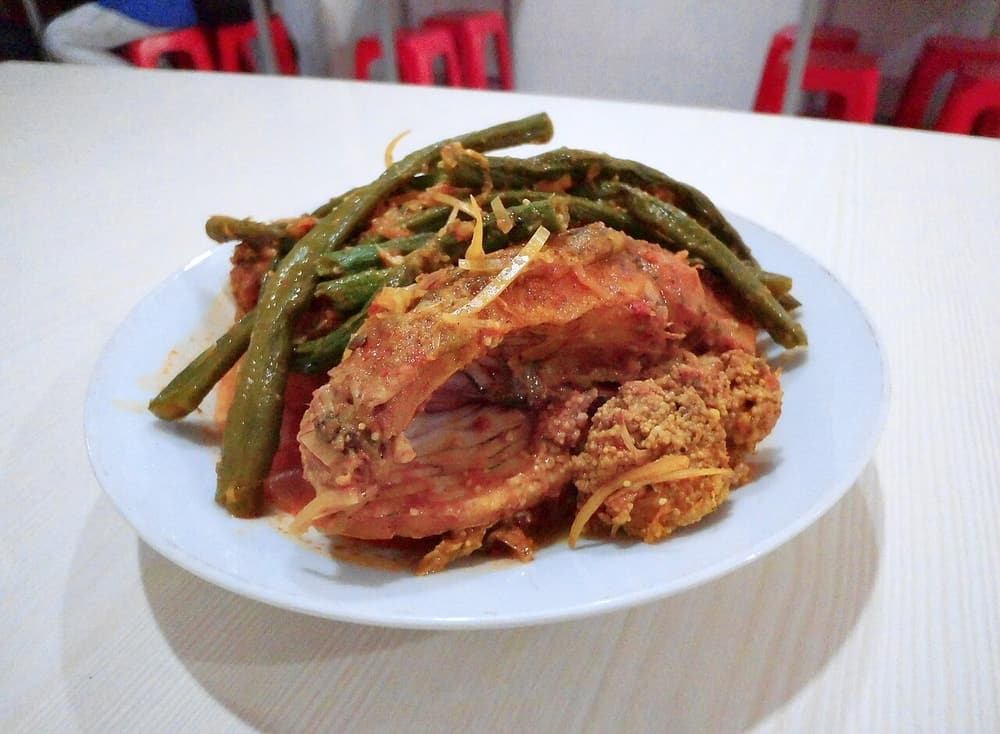
- Arsik: lake carp simmered until dry in a yellow paste of turmeric, torch ginger and andaliman, the local wild pepper that tingles on the tongue like its Sichuan cousin.
- Naniura: raw fish “cooked” in sour citrus and spices — the Batak answer to ceviche. Eat it where it is made fresh.
- Grilled lake fish: tilapia or carp over charcoal with sambal andaliman, on every Tuk Tuk menu.
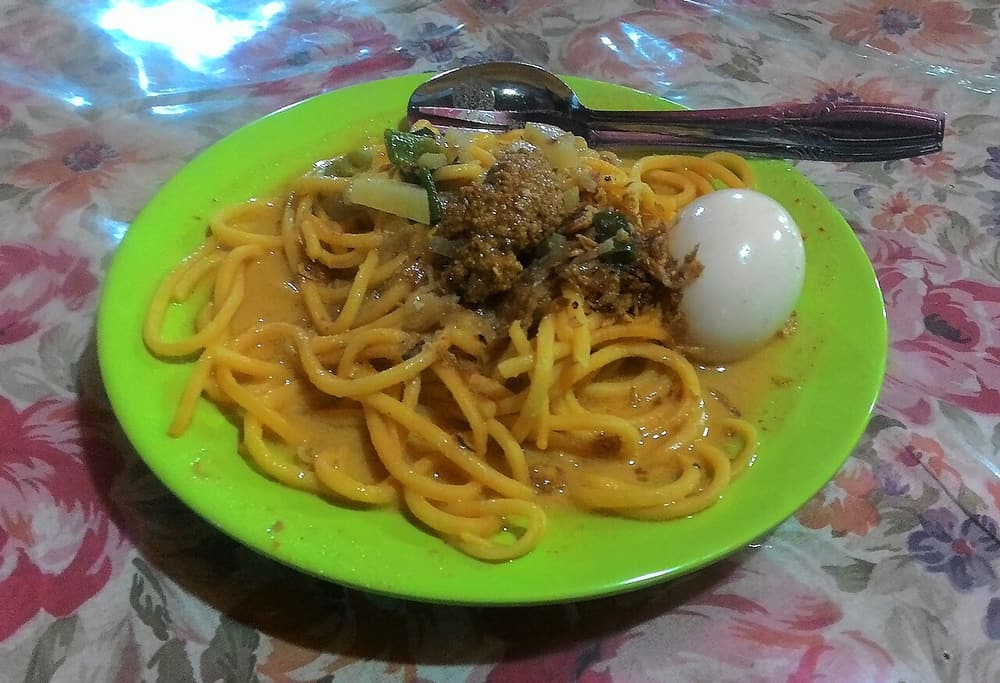
- Mie gomak: thick noodles in a spiced coconut sauce, a breakfast favourite, especially in Balige.
- Saksang and babi panggang: rich pork dishes. Batak cooking uses pork freely and some dishes include blood; Muslim travellers will find halal restaurants, usually clearly signed, in Parapat, Pangururan and around Tuk Tuk.
- Drinks: excellent arabica coffee from the highlands around the lake, fresh passion-fruit and tamarillo juices, and tuak, a mildly alcoholic palm wine drunk in village bars in the late afternoon. Beer is widely available.
Money
The currency is the Indonesian rupiah. Samosir runs on cash: guesthouses at the upper end and a few restaurants take cards, but scooter rental, boats, entrance donations, markets and most meals do not. There are ATMs in Tuk Tuk, Tomok, Ambarita and Pangururan, though they are not always stocked or friendly to foreign cards — withdraw what you need in Medan or Parapat and treat island machines as a top-up. By international standards prices are low; a simple lakeside room, three meals and a scooter cost less per day than a mid-range dinner in Europe.
Language, connectivity and practicalities
People speak Batak Toba among themselves and Indonesian with outsiders; English is common in Tuk Tuk and patchy elsewhere. Mobile data works well along the east coast and in towns, less so in the hills. Wi-Fi is standard in guesthouses but often slow. Electricity is 230 V with European-style two-pin plugs, and short power cuts are part of life. Time is UTC+7.
Safety and health
- Roads are the main risk: narrow, potholed in places and shared with animals and children. Ride slowly, never after dark if you can avoid it, and always with a helmet.
- Water: the lake is deep within a few strokes of the shore. Stay close in if you are not a strong swimmer, and avoid swimming near harbours and fish farms.
- Boats: use scheduled services and check for life jackets; sudden squalls are common in the afternoon.
- Sun and altitude: at 900 metres you burn faster than you expect, even under cloud.
- Health care: there are clinics and small hospitals in Pangururan, Parapat and Balige; anything serious means Medan. Carry travel insurance that covers evacuation, drink bottled or filtered water and bring any regular medicines with you.
- Crime against visitors is rare. Usual sense applies: lock your room and do not leave valuables on the jetty.
What to pack
- A light jumper or fleece for the evenings, and a rain jacket at any time of year.
- Sun hat, sunglasses and high-factor sunscreen.
- Swimwear and a quick-drying towel.
- Shoes with grip for waterfalls and hill paths; sandals for everything else.
- Enough cash in rupiah, and a spare bank card.
- A torch or phone light for power cuts, and a two-pin adaptor.
- Insect repellent for dusk by the water.
Sample itineraries
- Three days: Day 1 Medan to Parapat and across to Tuk Tuk. Day 2 by scooter to Tomok, Ambarita and Simanindo; swim at sunset. Day 3 a slow morning on the lake, then back to Medan.
- Five days: Day 1 Medan to Berastagi. Day 2 Sibayak at sunrise, Sipiso-piso, then down via Tele to Samosir. Day 3 the east-coast villages. Day 4 hot springs and Bukit Holbung, or simply the jetty. Day 5 boat to Parapat and the highway to Medan.
- Seven days: begin with two nights at Bukit Lawang for orangutans, then follow the five-day route — the classic North Sumatra loop, and the one the longer packaged tours follow.